TLDR
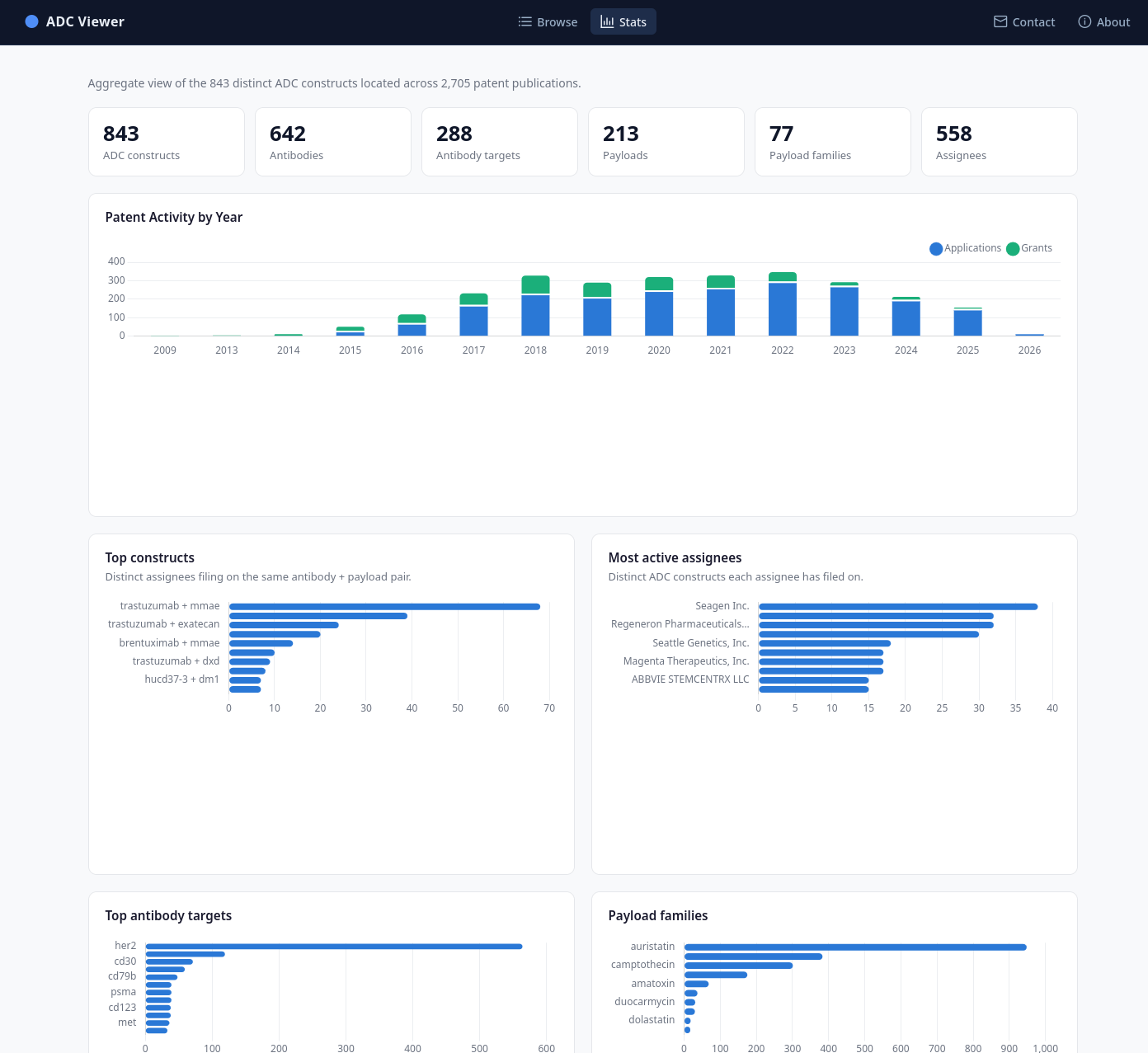
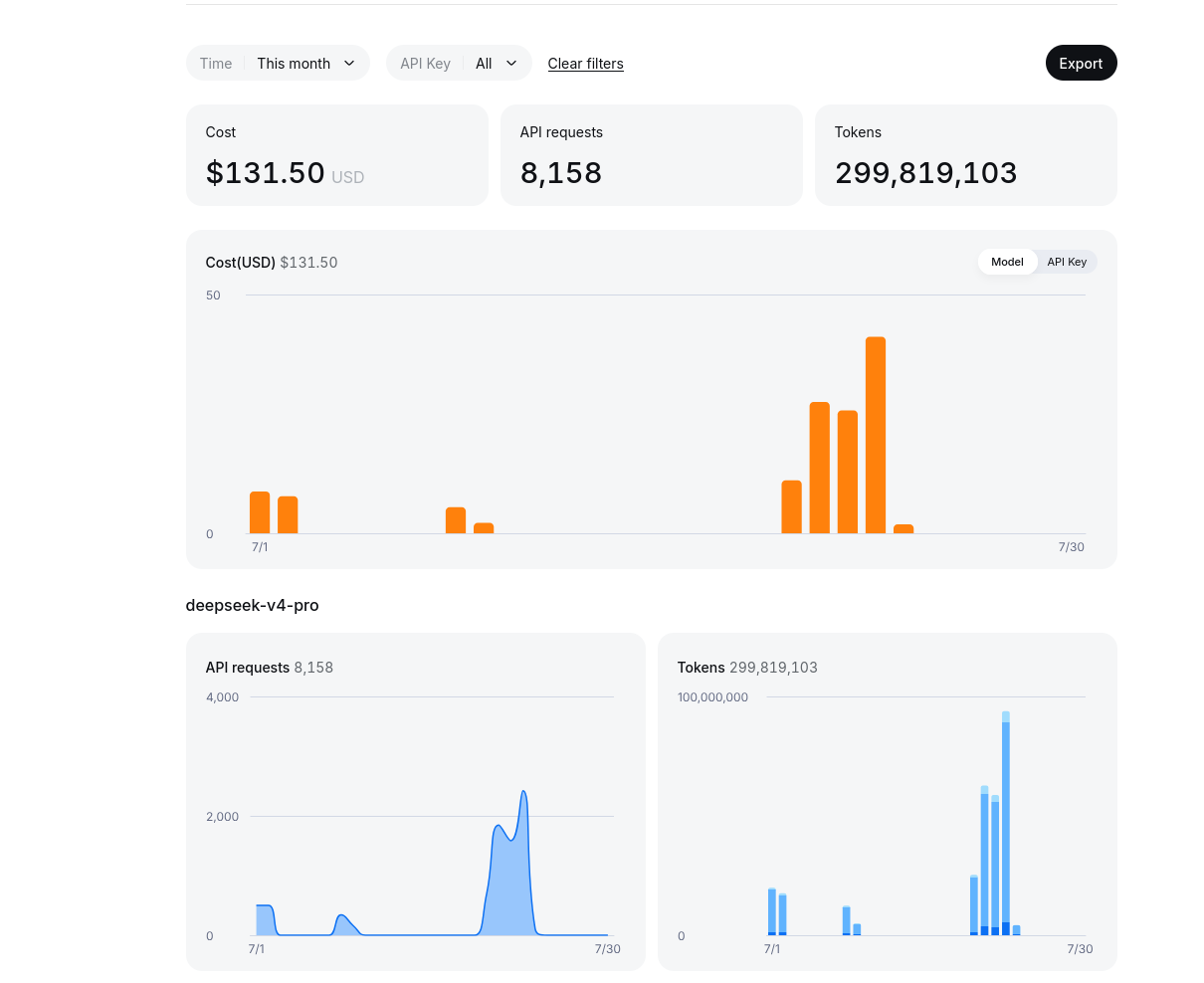
Deepseek-v4-pro reviewed about 8000 USPTO patent publications to identify ADCs for a cost of 131.50. Data modeling done with dbt identified 843 ADC constructs (same ab and warhead). Patent activity and construct views available at https://adcviewer.com.
–
Data Modeling Directions
I think three data shapes/grains make sense at this point. Patent activity is the most complete the others are draft or TBD.
- Patent activity: each row is a publication and the ADC components. Key is publication ID.
- Construct*: each row is a unique drug. Using unique antibody and warhead combinations for now.
- Program: each row is a company and construct. What drugs a company is working on.
*Construct is considered to be antibody and warhead (bare cytotoxic payload). Linker was too messy and sparsely populated. Target is too coarse and would collapse different abs. This is ok for now but will need re-visiting
Additional Data Directions
The patent-centric view misses the most recent activity due to patent applications typically not being public 18 months. There is a possible direction of using publicly available papers (PMC OA, bioRxiv/medRxiv, etc) filtered by something like MeSH terms to locate more recent information. It would follow the same process of download, filter, LLM classify, and extract.
What is Actually Needed
As always, more testing. Putting together a golden dataset as well as an anomalous dataset would be the responsible choice. Working as a solo developer on side projects it is a challenge at times to not go completely feral and abandon best practices.
Deepseek Costs:
ADC Viewer Stats: